
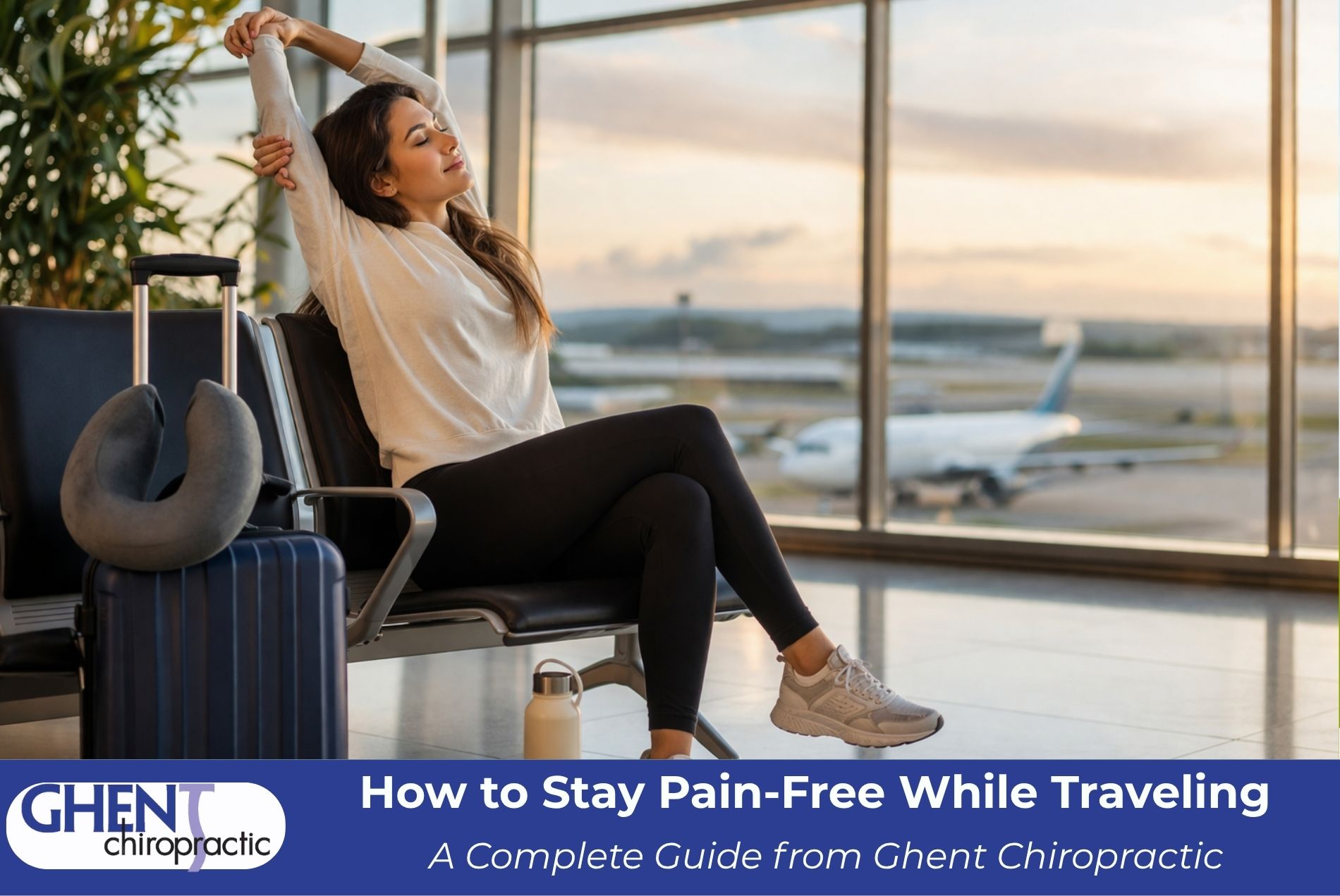
Traveling is one of life’s greatest pleasures—whether you’re heading out for a relaxing vacation, visiting family, or traveling for work. However, long hours in planes, cars, or trains can take a toll on your body, often leading to stiffness, back pain, neck tension, and fatigue.
At Ghent Chiropractic, we believe your journey should be as comfortable as your destination. With the right preparation and habits, you can minimize discomfort and stay pain-free while traveling.
Why Travel Causes Pain
Before diving into solutions, it’s important to understand why travel often leads to discomfort:
- Prolonged sitting puts pressure on your spine and discs
- Poor posture in cramped seats strains your neck and back
- Lack of movement reduces circulation and stiffens joints
- Carrying heavy luggage can strain muscles and joints
- Stress and fatigue increase muscle tension
Fortunately, these issues can be prevented with simple strategies.
1. Plan Ahead for Comfort
Preparation is key to avoiding pain before your trip even begins.
Choose Ergonomic Support
- Bring a neck pillow for proper cervical support
- Use a lumbar support cushion or rolled towel for your lower back
- Wear supportive shoes to reduce strain when walking or standing
Pack Smart
- Use luggage with wheels instead of carrying heavy bags
- Distribute weight evenly in backpacks
- Avoid overpacking to reduce strain on your body
2. Maintain Proper Posture
Your posture during travel plays a huge role in how your body feels.
Sitting Posture Tips
- Keep your feet flat on the floor
- Maintain a neutral spine (avoid slouching)
- Keep your shoulders relaxed and back
- Position your screen or book at eye level to avoid neck strain
Even small adjustments can significantly reduce discomfort.
3. Move Frequently
One of the biggest contributors to travel-related pain is staying still for too long.
Movement Tips
- Stand up and stretch every 30–60 minutes
- Walk down the aisle (on planes) or take breaks during road trips
- Perform simple seated stretches:
- Neck rolls
- Shoulder shrugs
- Ankle circles
Movement helps maintain circulation and prevents stiffness.
4. Stay Hydrated
Dehydration can contribute to muscle stiffness and fatigue.
- Drink plenty of water throughout your trip
- Limit caffeine and alcohol, which can dehydrate you
Proper hydration supports muscle function and overall comfort.
5. Stretch Before and After Travel
Stretching keeps your muscles flexible and reduces tension.
Key Areas to Stretch
- Neck and shoulders
- Lower back
- Hamstrings and hips
Taking just 5–10 minutes to stretch before and after travel can make a noticeable difference.
6. Use Ice or Heat When Needed
If you start to feel discomfort:
- Use ice packs for inflammation
- Use heat therapy for muscle tightness
Portable heat wraps or cold packs can be helpful during longer trips.
7. Get Adjusted Before and After Your Trip
One of the most effective ways to prevent and relieve travel-related pain is chiropractic care.
Benefits of Chiropractic Care for Travelers
- Improves spinal alignment
- Reduces muscle tension
- Enhances mobility and flexibility
- Helps prevent injuries
At Ghent Chiropractic, we recommend scheduling an adjustment before your trip to prepare your body—and another afterward to restore alignment.
8. Prioritize Sleep and Stress Management
Travel can disrupt your routine, leading to fatigue and increased tension.
- Bring a travel pillow and eye mask for better rest
- Practice deep breathing or relaxation techniques
- Stick to a consistent sleep schedule when possible
A well-rested body is less prone to pain.
Frequently Asked Questions (Q&A)
Q: Why does my back hurt after flying or driving long distances?
A: Prolonged sitting compresses the spine and reduces circulation, leading to stiffness and discomfort. Poor posture can make this worse.
Q: How often should I move during travel?
A: Ideally, you should move or stretch every 30 to 60 minutes to keep your muscles active and reduce stiffness.
Q: Are neck pillows actually helpful?
A: Yes. A good neck pillow supports your cervical spine and helps prevent neck strain, especially during long flights.
Q: Can chiropractic care help with travel-related pain?
A: Absolutely. Chiropractic adjustments can improve alignment, reduce tension, and help your body handle the physical stress of travel.
Q: What’s the best way to carry luggage without hurting my back?
A: Use rolling luggage whenever possible and avoid twisting your spine when lifting. Bend at your knees, not your waist.
Q: Should I stretch even if I’m not in pain?
A: Yes. Stretching helps prevent pain by keeping your muscles flexible and reducing tension before discomfort starts.
Q: Is it normal to feel stiff after traveling?
A: Yes, but it shouldn’t last long. If stiffness persists, a chiropractic adjustment can help restore normal movement.
Stay Comfortable on Your Next Trip
Travel doesn’t have to mean discomfort. By preparing ahead, maintaining good posture, staying active, and seeking chiropractic care, you can enjoy your journey without pain.
If you’re planning a trip, let Ghent Chiropractic help you stay aligned and pain-free every step of the way.
Contact Information
Ghent Chiropractic
250 W Brambleton Ave, Suite 102
Norfolk, VA 23510
Phone: (757) 622-1222
Website: ghentchiro.com
Request an Appointment: https://ghentchiro.com/appointments/