
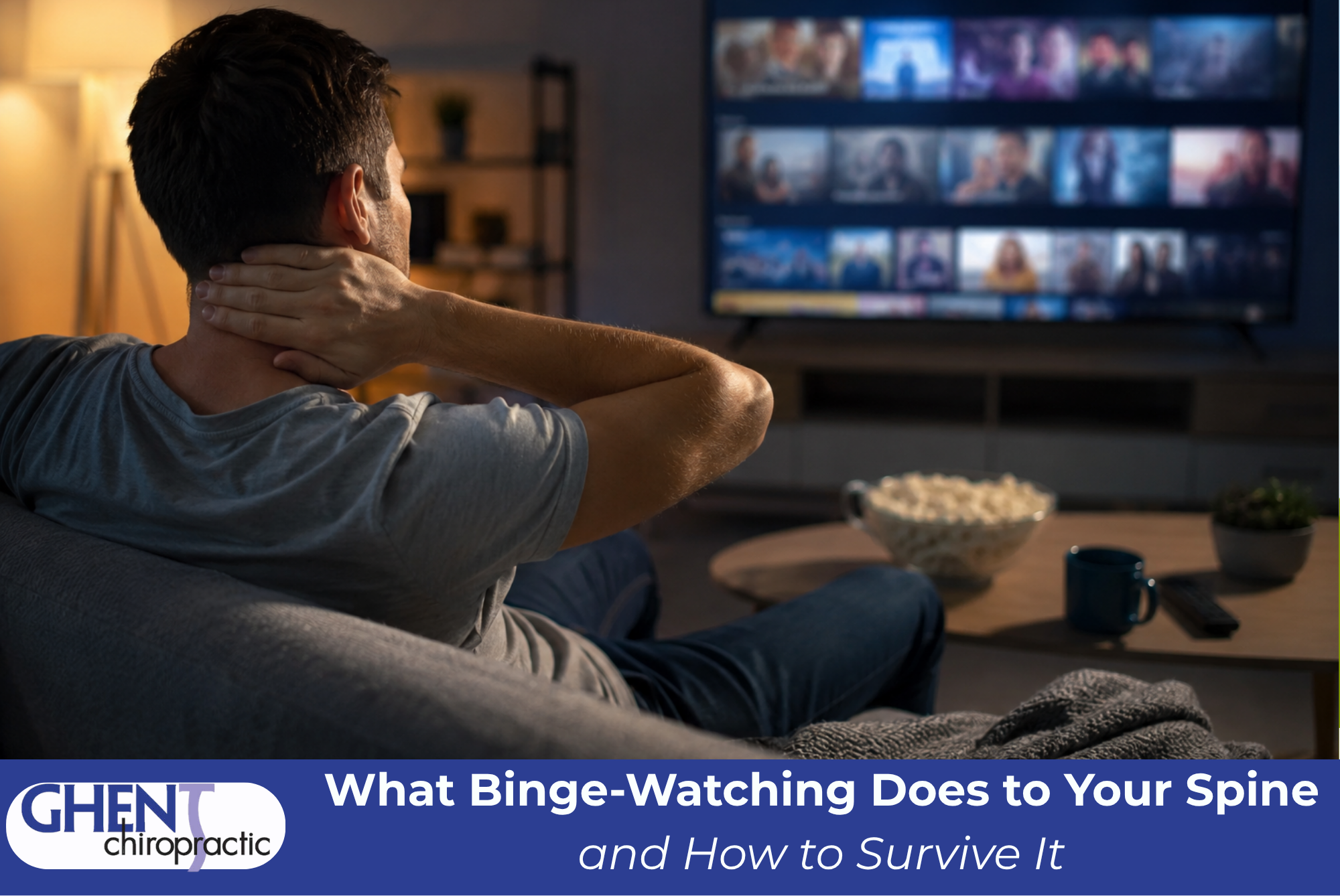
In today’s streaming era, it’s easier than ever to settle in for “just one more episode”—only to realize hours have passed. Whether you’re catching up on the latest hit series, watching sports marathons, or enjoying a movie weekend, binge-watching has become a common pastime. While it may be entertaining, spending long periods sitting in one position can take a significant toll on your spine, muscles, and overall health.
At Ghent Chiropractic, we often see patients experiencing neck pain, back pain, headaches, and stiffness that can be linked to prolonged screen time and poor posture habits. Understanding how binge-watching affects your body can help you protect your spine and stay comfortable while enjoying your favorite shows.
How Binge-Watching Impacts Your Spine
1. Forward Head Posture and “Tech Neck”
One of the most common issues associated with extended screen time is forward head posture, often called “tech neck.” When you lean your head forward to view a television, tablet, laptop, or smartphone, your neck muscles must support significantly more weight than they are designed to handle.
For every inch your head moves forward, the stress on your cervical spine increases dramatically. Over time, this can lead to:
- Neck pain and stiffness
- Shoulder tension
- Frequent headaches
- Reduced range of motion
- Muscle fatigue
2. Increased Lower Back Stress
Most couches and chairs do not adequately support the natural curve of your lower back. Sitting for several hours can compress spinal discs and strain supporting muscles.
Common symptoms include:
- Lower back pain
- Tight hip flexors
- Sciatica-like discomfort
- Muscle soreness
- Poor posture habits
3. Reduced Circulation
Extended sitting reduces blood flow throughout the body. This can contribute to:
- Muscle stiffness
- Joint discomfort
- Swelling in the legs
- Increased fatigue
- Reduced flexibility
Proper circulation helps deliver oxygen and nutrients to tissues that support spinal health.
4. Weakening Core and Postural Muscles
The longer you remain inactive, the less your core muscles engage. Over time, weakened abdominal and back muscles make it harder to maintain proper posture, placing additional stress on the spine.
5. Increased Risk of Chronic Pain
Repeated binge-watching sessions without movement can create long-term patterns of poor posture. Chronic strain may contribute to:
- Persistent neck pain
- Chronic low back pain
- Joint dysfunction
- Muscle imbalances
- Recurring headaches
Warning Signs Your Binge-Watching Habits May Be Affecting Your Spine
Pay attention to these symptoms:
- Neck stiffness after watching television
- Pain between the shoulder blades
- Frequent headaches
- Tingling or numbness in the arms
- Lower back discomfort
- Difficulty standing up after sitting
- Poor posture throughout the day
If these symptoms occur regularly, it may be time to evaluate your screen habits and spinal health.
How to Protect Your Spine During Binge-Watching Sessions
Maintain Proper Viewing Position
Your screen should be positioned at eye level whenever possible. Avoid looking down at phones or tablets for extended periods.
Support Your Lower Back
Use a lumbar support pillow or rolled towel to help maintain the natural curve of your spine while sitting.
Keep Both Feet Flat
Avoid crossing your legs for long periods. Keep both feet flat on the floor to support balanced posture.
Change Positions Frequently
Try not to remain in the same position for more than 30 minutes at a time.
Take Movement Breaks
Set a reminder to stand, stretch, and walk around between episodes. Even a few minutes of movement can improve circulation and reduce stiffness.
Stretch Your Neck and Shoulders
Simple stretches can help relieve tension caused by prolonged sitting:
- Neck side stretches
- Chin tucks
- Shoulder rolls
- Chest-opening stretches
Stay Hydrated
Proper hydration supports spinal disc health and can help reduce muscle tension.
Chiropractic Care Can Help Reverse the Effects of Prolonged Sitting
Even with good habits, many people develop spinal restrictions and muscle imbalances from sedentary lifestyles. Chiropractic care focuses on restoring proper alignment, improving mobility, and reducing pain associated with poor posture and extended sitting.
At Ghent Chiropractic, our team provides personalized care plans designed to address:
- Neck pain
- Back pain
- Postural imbalances
- Headaches
- Muscle tension
- Reduced mobility
Regular chiropractic adjustments can help improve spinal function, relieve discomfort, and support your overall wellness goals.
Healthy Habits for Streaming Enthusiasts
If you enjoy marathon viewing sessions, consider these healthy habits:
- Stand during episode intros and credits
- Stretch every 30 to 60 minutes
- Use ergonomic seating when possible
- Alternate sitting and standing positions
- Limit phone use while watching television
- Perform daily strengthening exercises for your core and back
Small changes can make a significant difference in how your body feels after a long viewing session.
When Should You See a Chiropractor?
You should consider scheduling an evaluation if you experience:
- Ongoing neck or back pain
- Frequent headaches
- Numbness or tingling
- Poor posture
- Pain that worsens after sitting
- Difficulty moving comfortably
Early intervention can often prevent minor issues from becoming chronic conditions.
Comprehensive Q&A: Binge-Watching and Spinal Health
Can binge-watching really cause back pain?
Yes. Sitting for long periods, especially with poor posture, places stress on the spine, muscles, and supporting ligaments. This can lead to both acute and chronic back pain.
What is tech neck?
Tech neck refers to neck pain and strain caused by looking down at screens for extended periods. It is increasingly common among people who frequently use smartphones, tablets, and laptops.
How often should I get up while watching television?
Experts generally recommend standing and moving every 30 to 60 minutes to improve circulation and reduce spinal stress.
Does sitting on the couch hurt my posture?
It can. Many couches do not provide adequate lumbar support, encouraging slouched positions that strain the spine.
Can chiropractic care help with tech neck?
Yes. Chiropractic adjustments, posture education, and targeted exercises can help relieve symptoms associated with tech neck and improve spinal alignment.
Why does my neck hurt after watching TV?
Your viewing angle, posture, and duration of sitting may contribute to muscle strain and spinal stress in the neck region.
Are headaches related to poor posture?
Absolutely. Tension headaches often develop when neck and shoulder muscles become tight due to prolonged sitting or poor posture.
Can binge-watching affect circulation?
Yes. Extended sitting reduces blood flow and may contribute to stiffness, swelling, and muscle fatigue.
What stretches help after a binge-watching session?
Chin tucks, neck stretches, shoulder rolls, chest stretches, and gentle walking can help restore mobility and reduce tension.
How can I make my viewing setup more ergonomic?
Position screens at eye level, support your lower back, keep your feet flat on the floor, and avoid slouching whenever possible.
Prioritize Your Spinal Health While Enjoying Your Favorite Shows
Binge-watching may be relaxing, but hours of uninterrupted sitting can create lasting effects on your spine and overall health. By practicing better posture, taking regular movement breaks, and seeking professional chiropractic care when needed, you can enjoy your favorite entertainment while protecting your body.
If you’re experiencing neck pain, back pain, headaches, or posture-related discomfort, the team at Ghent Chiropractic is here to help you feel your best.
Contact Information
Ghent Chiropractic
250 W Brambleton Ave, Suite 102
Norfolk, VA 23510
Phone: (757) 622-1222
Website: https://ghentchiro.com/
Request An Appointment: https://ghentchiro.com/appointments/