
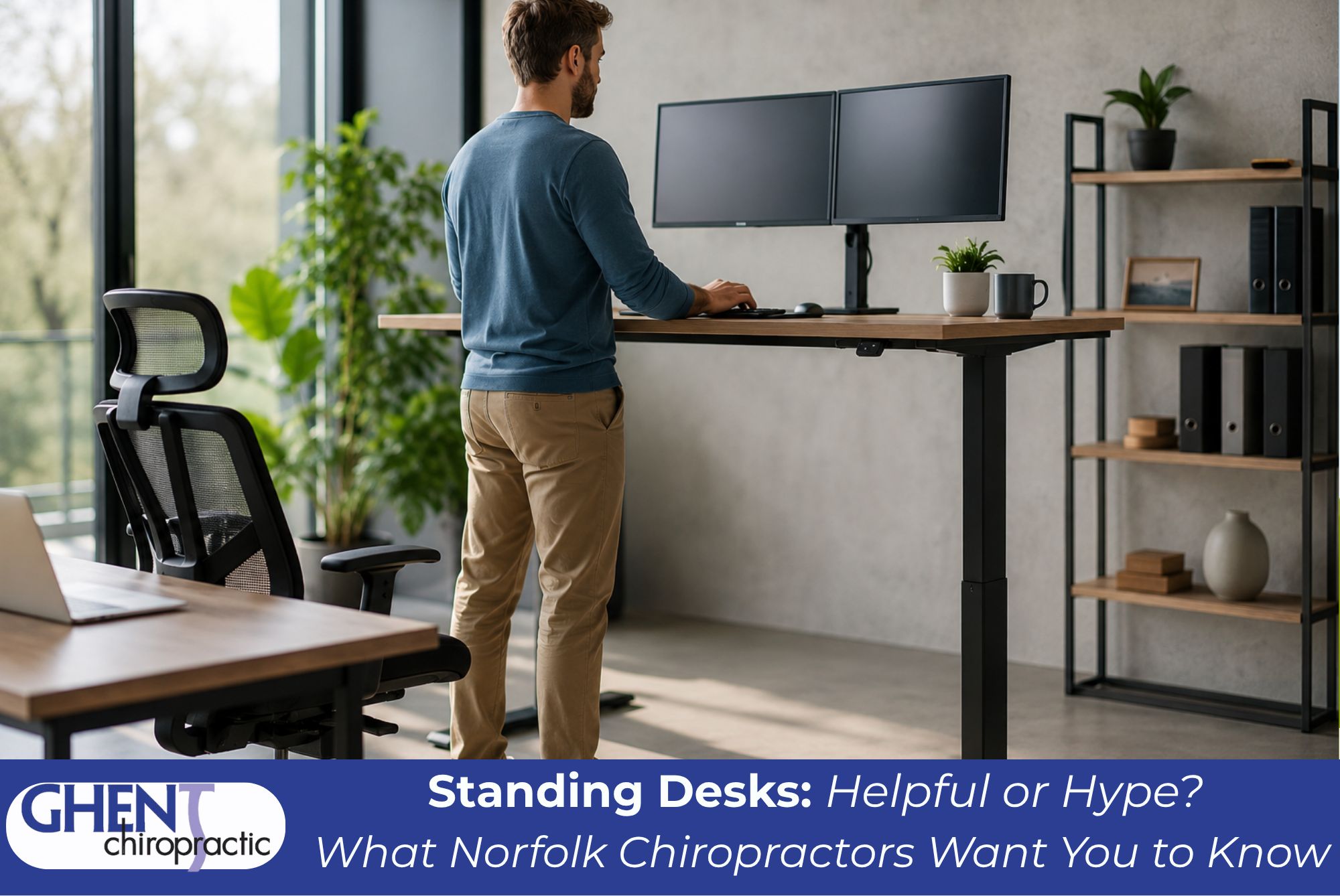
In recent years, standing desks have become one of the most popular workplace wellness trends. From corporate offices to home workstations, many people have swapped traditional seated desks for adjustable standing desks in hopes of improving posture, reducing back pain, and boosting productivity. But are standing desks truly beneficial, or are they simply another workplace fad?
At Ghent Chiropractic, we frequently hear patients ask whether standing desks can help alleviate neck pain, back pain, and posture-related issues. The answer is not as simple as “yes” or “no.” While standing desks can provide significant benefits when used correctly, they are not a cure-all for musculoskeletal discomfort.
Let’s take a closer look at the science behind standing desks, their potential benefits, limitations, and how to use them effectively for optimal spinal health.
Why Sitting for Long Periods Can Be Problematic
Modern lifestyles often require extended periods of sitting. Whether you’re working at a computer, attending meetings, commuting, or relaxing at home, prolonged sitting has become the norm for many Americans.
Extended sitting may contribute to:
- Poor posture
- Increased neck and shoulder tension
- Lower back pain
- Reduced circulation
- Muscle stiffness
- Increased risk of obesity and cardiovascular issues
- Decreased energy levels
When sitting for long periods, many individuals unconsciously slouch forward, causing excessive strain on the spine, muscles, and supporting structures of the body.
How Standing Desks Can Help
Standing desks were designed to encourage movement and reduce the amount of time spent sitting. When used properly, they may offer several advantages.
Improved Posture
Standing often encourages a more neutral spinal position. Many users report becoming more aware of their posture and making fewer adjustments that lead to slouching.
Reduced Lower Back Discomfort
For some individuals, alternating between sitting and standing throughout the day can decrease pressure on the lumbar spine and reduce lower back pain.
Increased Movement
One of the greatest benefits of standing desks is that they promote movement. Standing naturally encourages shifting positions, stretching, and walking around more frequently.
Better Energy and Focus
Some users report feeling more alert and productive when standing for portions of the workday. Standing can increase circulation and help combat the sluggish feeling often associated with prolonged sitting.
Potential Long-Term Health Benefits
Reducing sedentary behavior may contribute to better overall health. While standing alone is not a substitute for exercise, breaking up long sitting periods may positively impact metabolic health and circulation.
Are Standing Desks Overhyped?
While standing desks offer benefits, they are often marketed as a complete solution for back pain and poor posture. Unfortunately, standing all day can create its own problems.
Standing Too Long Can Cause Discomfort
Remaining in one position—whether sitting or standing—for extended periods is not ideal. Excessive standing may contribute to:
- Foot pain
- Leg fatigue
- Varicose veins
- Hip discomfort
- Lower back strain
Posture Still Matters
Simply standing does not guarantee proper posture. Many individuals continue to lean forward, round their shoulders, or crane their necks toward computer screens while standing.
Movement Is More Important Than Standing Alone
Research consistently shows that frequent movement throughout the day is more beneficial than simply replacing sitting with standing. The goal is not to stand all day but to alternate positions regularly.
The Ideal Approach: Alternate Between Sitting and Standing
Most ergonomics experts recommend alternating between sitting and standing throughout the workday.
A practical strategy includes:
- Sitting for 30–60 minutes
- Standing for 15–30 minutes
- Taking brief walking breaks every hour
- Stretching regularly
This approach helps prevent fatigue while promoting healthy movement patterns.
Tips for Proper Standing Desk Setup
To maximize the benefits of a standing desk, proper workstation ergonomics are essential.
Position Your Monitor Correctly
- Top of screen should be at or slightly below eye level
- Screen should be approximately arm’s length away
- Avoid looking down for extended periods
Maintain Neutral Posture
- Keep shoulders relaxed
- Avoid leaning forward
- Keep ears aligned over shoulders
- Engage your core muscles gently
Wear Supportive Footwear
If standing for extended periods, supportive shoes or an anti-fatigue mat can help reduce stress on your feet and joints.
Keep Elbows at 90 Degrees
Your keyboard and mouse should allow your elbows to remain comfortably bent without shrugging your shoulders.
Continue Moving
Standing desks work best when combined with regular movement, stretching, and exercise.
How Chiropractic Care Complements Workplace Ergonomics
Even with an excellent workstation setup, many people continue to experience discomfort due to spinal misalignments, muscle tension, and repetitive strain.
Chiropractic care focuses on restoring proper spinal alignment and improving musculoskeletal function. Regular chiropractic adjustments may help:
- Reduce neck pain
- Relieve lower back pain
- Improve posture
- Enhance mobility
- Decrease muscle tension
- Support long-term spinal health
At Ghent Chiropractic, we help patients identify workplace habits that may contribute to discomfort and develop personalized strategies to support healthier movement and posture throughout the day.
When Should You See a Chiropractor?
You may benefit from chiropractic care if you experience:
- Frequent neck pain
- Chronic back pain
- Tension headaches
- Shoulder stiffness
- Poor posture
- Discomfort while sitting or standing
- Reduced mobility
Addressing these issues early can help prevent more serious problems from developing over time.
Frequently Asked Questions About Standing Desks
Do standing desks help with back pain?
They can help some individuals reduce lower back discomfort by decreasing prolonged sitting. However, standing all day may also cause strain. Alternating between sitting and standing is generally most effective.
How many hours per day should I stand at my desk?
Experts typically recommend gradually increasing standing time and alternating throughout the day rather than standing continuously.
Are standing desks better for posture?
Standing desks can encourage better posture, but proper workstation setup and body awareness remain essential.
Can standing desks prevent neck pain?
A properly adjusted standing desk may reduce neck strain, especially when the monitor is positioned at eye level. However, poor posture while standing can still lead to neck pain.
Is standing all day healthy?
No. Excessive standing may lead to fatigue, foot pain, and circulation issues. Regular movement and changing positions are more important than standing continuously.
Do I need chiropractic care if I use a standing desk?
Even with an ergonomic workspace, spinal misalignments and muscle tension can still occur. Chiropractic care can help address underlying issues contributing to discomfort.
What are signs my workstation may be causing pain?
Common indicators include:
- Neck stiffness
- Shoulder tension
- Headaches
- Lower back pain
- Wrist discomfort
- Fatigue during work hours
Can chiropractic adjustments improve posture?
Yes. Chiropractic care can help improve spinal alignment and mobility, making it easier to maintain healthy posture habits.
Improve Your Workplace Comfort with Ghent Chiropractic
Standing desks can be a valuable tool when used correctly, but they are not a substitute for proper ergonomics, regular movement, and professional spinal care. If you’re experiencing neck pain, back pain, poor posture, or discomfort related to desk work, the team at Ghent Chiropractic is here to help.
Our experienced chiropractic professionals provide personalized care designed to address the root cause of discomfort and support your long-term health and wellness goals.
Contact Information
Ghent Chiropractic
250 W Brambleton Ave, Suite 102
Norfolk, VA 23510
Phone: (757) 622-1222
Website: https://ghentchiro.com/
Request an Appointment: https://ghentchiro.com/appointments/