
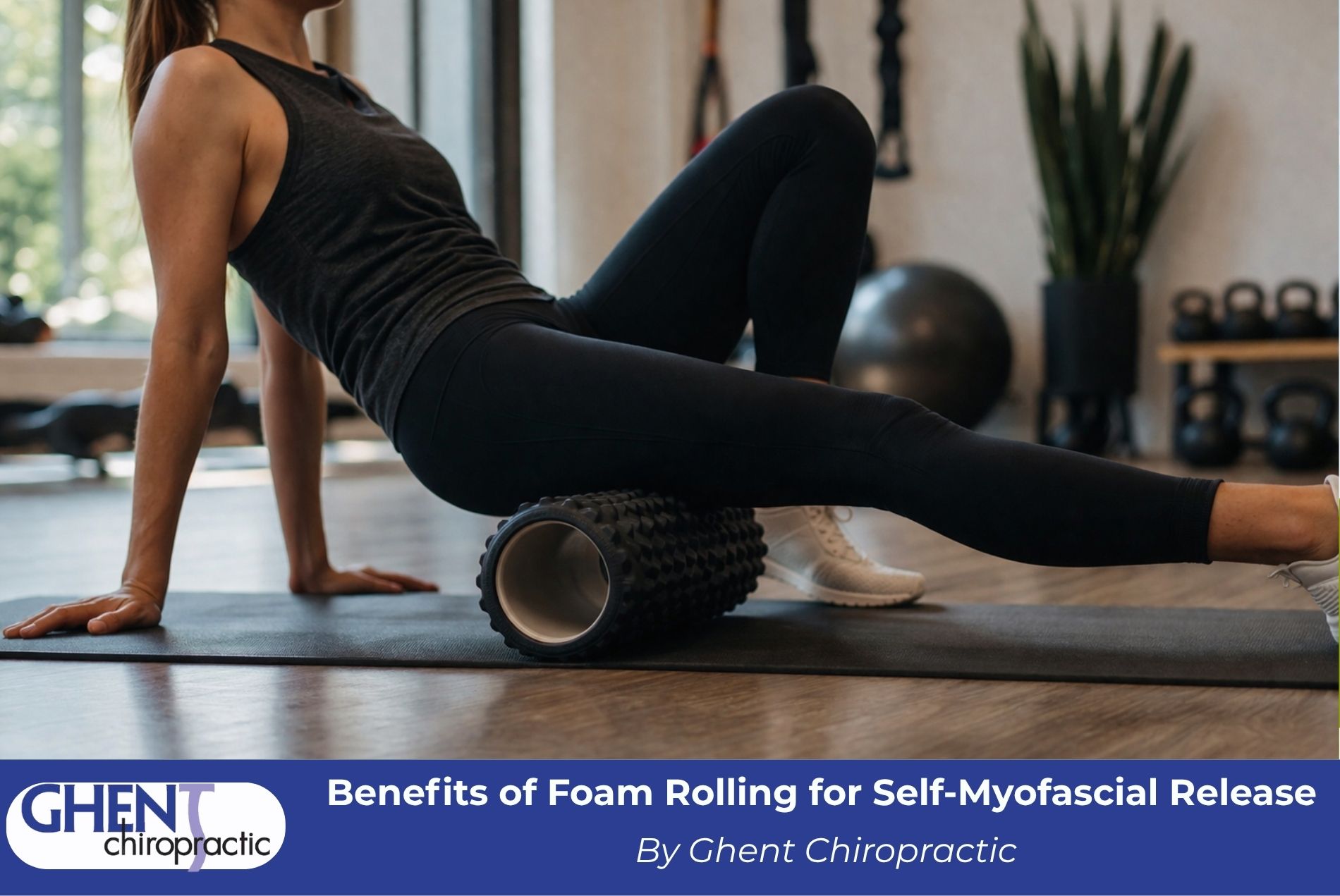
By Ghent Chiropractic
If you’ve ever experienced tight muscles, lingering soreness, or restricted movement after exercise—or even from sitting too long—you’re not alone. One of the most effective, accessible tools for relieving these issues is foam rolling, a technique known as self-myofascial release (SMR).
At Ghent Chiropractic, led by Dr. John Clayton, we often recommend foam rolling as part of a comprehensive approach to musculoskeletal health. With advanced certifications in Active Release Techniques (ART) and FAKTR protocols, Dr. Clayton specializes in treating soft tissue disorders and optimizing recovery for patients ranging from everyday individuals to elite athletes.
Let’s take a deeper look at foam rolling, how it works, and why it can be a powerful addition to your wellness routine.
What Is Self-Myofascial Release?
Self-myofascial release is a technique that targets the fascia—the connective tissue that surrounds muscles, bones, and joints. When fascia becomes tight or restricted due to injury, overuse, or inactivity, it can lead to pain, stiffness, and decreased mobility.
Foam rolling applies controlled pressure to these areas, helping to:
- Break up adhesions (knots)
- Improve blood flow
- Restore normal muscle function
Key Benefits of Foam Rolling
1. Reduces Muscle Tension and Soreness
Foam rolling helps release tight muscles and reduce delayed onset muscle soreness (DOMS), making it ideal after workouts or long periods of inactivity.
2. Improves Flexibility and Range of Motion
Regular use can increase joint mobility without negatively affecting muscle performance—something static stretching alone doesn’t always achieve.
3. Enhances Athletic Performance
By improving tissue quality and movement efficiency, foam rolling helps athletes perform better and reduce injury risk.
4. Promotes Faster Recovery
Increased circulation delivers oxygen and nutrients to muscles more efficiently, speeding up recovery after physical activity.
5. Supports Injury Prevention
Addressing tightness and imbalances early can prevent more serious injuries down the road.
6. Helps Manage Chronic Pain
For individuals with conditions like plantar fasciitis, IT band syndrome, or lower back pain, foam rolling can provide significant relief when used correctly.
Foam Rolling vs. Professional Treatment
While foam rolling is an excellent self-care tool, it works best when combined with professional care.
At Ghent Chiropractic, Dr. John Clayton utilizes:
- Active Release Techniques (ART): A hands-on therapy targeting specific soft tissue restrictions
- FAKTR (Functional and Kinetic Treatment with Rehabilitation): A system that combines manual therapy with movement-based rehab
These advanced techniques go deeper than foam rolling alone, identifying and treating the root cause of pain—not just the symptoms.
Best Practices for Foam Rolling
To get the most out of foam rolling:
- Roll slowly (about 1 inch per second)
- Pause on tender spots for 20–30 seconds
- Avoid rolling directly over joints or bones
- Breathe deeply to help muscles relax
- Stay consistent—daily use yields the best results
Common Areas to Foam Roll
- Calves
- Hamstrings
- Quadriceps
- IT band (outer thigh)
- Glutes
- Upper back (thoracic spine)
If you’re unsure where to start, a professional evaluation can help guide your routine.
When to Seek Professional Help
Foam rolling is effective, but it’s not a cure-all. You should consult a chiropractor if you experience:
- Persistent pain that doesn’t improve
- Sharp or radiating discomfort
- Limited mobility affecting daily activities
- Recurring injuries
Dr. Clayton’s expertise in soft tissue therapy ensures that you receive targeted, effective care tailored to your needs.
Q&A: Foam Rolling and Self-Myofascial Release
Q: How often should I foam roll?
A: Ideally, you can foam roll daily, especially after workouts or long periods of sitting. Even 5–10 minutes can make a difference.
Q: Is foam rolling supposed to hurt?
A: You may feel discomfort, especially on tight areas, but it should not be unbearable. Think “good pain,” not sharp or intense pain.
Q: Can foam rolling replace stretching?
A: Not entirely. Foam rolling and stretching complement each other. SMR improves tissue quality, while stretching improves length and flexibility.
Q: How long should I spend on each muscle group?
A: About 30–60 seconds per area is sufficient. Spend more time on particularly tight spots.
Q: Can foam rolling help with back pain?
A: Yes, especially for the upper back. However, avoid rolling the lower back directly without guidance. A professional assessment is recommended.
Q: Is foam rolling safe for everyone?
A: Most people can safely foam roll, but those with certain conditions (like osteoporosis, severe injuries, or circulatory issues) should consult a healthcare provider first.
Q: What type of foam roller should I use?
A: Beginners should start with a softer roller. Firmer or textured rollers provide deeper pressure and are better for advanced users.
Q: Can foam rolling improve posture?
A: Yes. By reducing muscle tightness and improving mobility, foam rolling can support better alignment and posture.
Take the Next Step Toward Better Mobility
Foam rolling is a powerful tool—but when combined with expert care, the results are even better. Whether you’re recovering from an injury, improving athletic performance, or simply trying to move better, Ghent Chiropractic is here to help.
Contact Information
Ghent Chiropractic
250 W Brambleton Ave, Suite 102
Norfolk, VA 23510
📞 Phone: (757) 622-1222
🌐 Website: https://ghentchiro.com/
📅 Request an Appointment: https://ghentchiro.com/appointments/