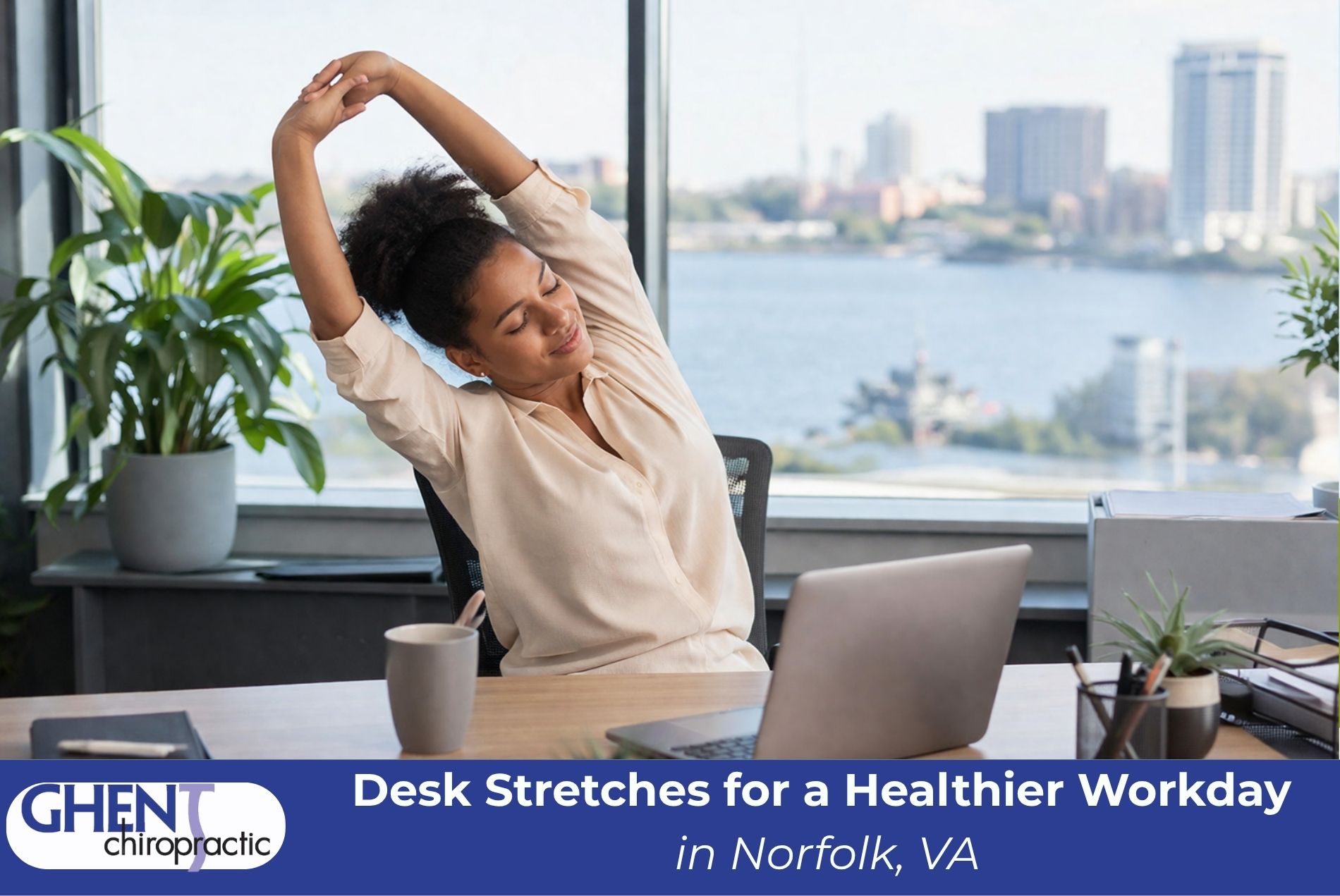
Modern work environments often require long hours of sitting, typing, and screen time. While this may seem harmless, prolonged desk work can contribute to muscle tightness, joint stiffness, poor posture, and chronic pain. Incorporating simple desk stretches throughout the day can help improve mobility, reduce discomfort, and support overall wellness. At Ghent Chiropractic, patients receive personalized care from Dr. John Clayton, who specializes in advanced soft tissue treatments including Active Release Techniques (ART) and FAKTR protocols—methods widely used by athletes to treat injuries and improve performance.
If you are searching for “desk stretches for back pain,” “office stretches Norfolk VA,” or “chiropractor for posture pain near me,” this guide provides practical strategies to help you stay mobile and comfortable throughout your workday.
Why Desk Work Leads to Pain and Stiffness
Sitting for extended periods places stress on the spine, muscles, and joints. Over time, this can lead to imbalances in the body, especially when combined with poor posture.
Common issues associated with desk work include:
Neck and shoulder tension
Lower back pain
Hip tightness
Wrist and forearm strain
Reduced circulation
Decreased mobility
These problems often develop gradually and can become chronic if not addressed.
The Importance of Movement During the Workday
The human body is designed for movement. When we remain in static positions for long periods, muscles can become tight while others weaken.
Incorporating movement and stretching throughout the day helps:
Improve blood flow
Reduce muscle tension
Maintain joint mobility
Support better posture
Prevent long-term discomfort
Even short breaks for stretching can make a significant difference in how your body feels.
Simple Desk Stretches You Can Do at Work
The following stretches can be performed at your desk with minimal space and no equipment.
1. Neck Stretch
Gently tilt your head toward one shoulder until you feel a stretch along the opposite side of your neck. Hold for 15–20 seconds and repeat on the other side.
Benefits:
Reduces neck tension
Improves flexibility
Helps relieve “tech neck”
2. Shoulder Rolls
Roll your shoulders forward in a circular motion for 10 repetitions, then reverse the direction.
Benefits:
Releases shoulder tension
Improves circulation
Supports upper back mobility
3. Seated Spinal Twist
Sit upright and gently rotate your torso to one side, placing your hand on the back of your chair for support. Hold for 15–20 seconds and repeat on the other side.
Benefits:
Improves spinal mobility
Relieves lower back tension
Encourages better posture
4. Chest Opener Stretch
Clasp your hands behind your back and gently lift your arms while opening your chest.
Benefits:
Counteracts rounded shoulders
Improves posture
Reduces upper body tightness
5. Wrist and Forearm Stretch
Extend one arm forward with your palm facing up. Use your other hand to gently pull your fingers downward. Hold and repeat on both sides.
Benefits:
Reduces wrist strain
Helps prevent repetitive stress injuries
Supports forearm flexibility
6. Hip Flexor Stretch (Standing)
Stand up and take a small step back with one foot. Gently shift your weight forward to stretch the front of the hip.
Benefits:
Relieves hip tightness
Improves lower body mobility
Reduces lower back strain
7. Seated Hamstring Stretch
Extend one leg forward while seated and reach toward your toes, keeping your back straight.
Benefits:
Improves leg flexibility
Reduces lower back tension
Supports circulation
How Often Should You Stretch?
For best results, aim to:
Stand up or stretch every 30–60 minutes
Incorporate 3–5 minutes of movement each break
Alternate between sitting and standing positions if possible
Consistency is key to preventing stiffness and maintaining mobility.
The Role of Posture in Workplace Health
In addition to stretching, posture plays a critical role in preventing pain.
Healthy desk posture includes:
Keeping your screen at eye level
Maintaining a neutral spine
Keeping shoulders relaxed
Placing feet flat on the floor
Avoiding prolonged slouching
Even with good posture, regular movement is still essential.
When Desk Pain Becomes Chronic
If discomfort persists despite stretching and posture improvements, it may indicate underlying soft tissue dysfunction or joint restriction.
At Ghent Chiropractic, Dr. John Clayton evaluates movement patterns and identifies areas of restriction contributing to pain.
Advanced Soft Tissue Treatment: ART and FAKTR
Dr. Clayton is certified in:
Active Release Techniques (ART)
FAKTR (Functional and Kinetic Treatment with Rehabilitation)
These advanced soft tissue therapies are commonly used by athletes to treat:
Muscle adhesions
Scar tissue
Overuse injuries
Chronic tension patterns
These techniques help restore normal tissue function, improve mobility, and reduce pain.
Combining Chiropractic Care with Movement Therapy
A comprehensive approach to desk-related pain often includes:
Chiropractic adjustments
Soft tissue therapy (ART and FAKTR)
Corrective exercises
Postural retraining
This approach addresses both the symptoms and the underlying causes of discomfort.
Why Choose Ghent Chiropractic in Norfolk, VA?
Patients throughout Norfolk choose Ghent Chiropractic for expert care focused on restoring movement and relieving pain.
Led by Dr. John Clayton, the practice offers:
Advanced soft tissue treatment techniques
Personalized care plans
Experience working with athletes and active individuals
Focus on long-term mobility and performance
Whether you are dealing with desk-related discomfort or sports injuries, the goal is to help you move better and feel better.
Frequently Asked Questions About Desk Stretches
Can desk stretches really reduce pain?
Yes. Regular movement and stretching can help reduce muscle tension and improve circulation.
How long should I stretch during the workday?
Short breaks of 3–5 minutes every hour can be effective.
What if stretching doesn’t relieve my pain?
Persistent discomfort may require evaluation and treatment by a healthcare professional.
Can chiropractic care help with desk-related pain?
Yes. Chiropractic and soft tissue therapies can address underlying issues contributing to pain.
Schedule a Consultation in Norfolk, VA
If you are experiencing neck, back, or joint pain from long hours at your desk, professional care can help restore mobility and prevent further issues.
Ghent Chiropractic
250 W Brambleton Ave, Suite 102
Norfolk, VA 23510
Phone: (757) 622-1222
Website: ghentchiro.com
Request An Appointment: https://ghentchiro.com/appointments/
Contact Ghent Chiropractic today to schedule your consultation with Dr. John Clayton and find the right care plan for your needs.