Chiropractic Adjustments in Norfolk, VA
The chiropractic adjustment is the cornerstone of care at Ghent Chiropractic in Norfolk, VA — and for good reason. A precisely delivered spinal or extremity adjustment corrects joint misalignments, restores normal range of motion, relieves nerve pressure, and allows the body’s innate healing capacity to function without interference. Under the care of Dr. John Clayton, chiropractic adjustments are not a one-size-fits-all treatment — they are a highly individualized clinical intervention tailored to each patient’s specific anatomy, condition, and goals.
Request an AppointmentWhat Is a Chiropractic Adjustment?
A chiropractic adjustment — also called spinal manipulation — is a controlled, directed force applied to a specific joint of the spine or extremity that has lost its normal range of motion or alignment. When spinal joints become restricted or misaligned due to injury, postural stress, repetitive activity, or accumulated physical trauma, the resulting subluxation interferes with normal nerve transmission between the brain and the body. This interference can manifest as pain, muscle tension, reduced mobility, organ dysfunction, or simply a general sense of not feeling right.
By restoring proper joint position and mobility through an adjustment, Dr. Clayton removes this nerve interference and allows the body to communicate and heal the way it was designed to. The effects of a well-delivered adjustment are often immediate and profound — patients frequently report reduced pain, improved mobility, and a sense of physical ease that they had not experienced in months or years.
Spinal vs. Extremity Adjustments
Many patients are familiar with spinal adjustments — corrections to the cervical (neck), thoracic (mid-back), and lumbar (low back) spine. What distinguishes Ghent Chiropractic is Dr. Clayton’s training and expertise in full-body extremity adjusting. Joints throughout the body — including the shoulders, elbows, wrists, hips, knees, ankles, and feet — can develop the same type of misalignment and restriction as spinal joints, with equally significant consequences for pain and movement.
Dr. Clayton evaluates and adjusts both the spine and the extremities as needed, addressing the complete kinetic chain rather than treating the spine in isolation. This full-body approach is particularly important for athletes and active patients whose pain and dysfunction frequently involve the extremities as much as the spine.
Conditions Treated With Chiropractic Adjustments
Chiropractic adjustments at Ghent Chiropractic effectively address a wide range of conditions, including:
- Low back pain and lumbar disc disorders
- Neck pain and cervical stiffness
- Upper and mid-back pain
- Sciatica and nerve pain radiating into the legs
- Headaches and cervicogenic migraines
- Shoulder pain and rotator cuff dysfunction
- Elbow, wrist, and hand pain
- Hip pain and sacroiliac joint dysfunction
- Knee pain and patellofemoral syndrome
- Ankle and foot pain including plantar fasciitis
- Sports injuries involving the spine and extremities
- Auto accident injuries including whiplash and cervical sprain
- Postural distortions and chronic compensatory pain patterns
Chiropractic Adjustment Techniques Used at Ghent Chiropractic
Dr. Clayton is trained in multiple adjustment techniques, which allows him to select the most appropriate approach for each patient’s age, body type, condition, and comfort level. Techniques commonly used at Ghent Chiropractic include:
- Diversified Technique — the most widely used chiropractic method, involving precise manual thrusts to restore joint motion. Often accompanied by the familiar “pop” sound of gas releasing from the joint capsule.
- Gonstead Technique — a highly specific, biomechanically precise method of spinal analysis and adjustment that focuses on identifying and correcting the most clinically significant subluxation levels.
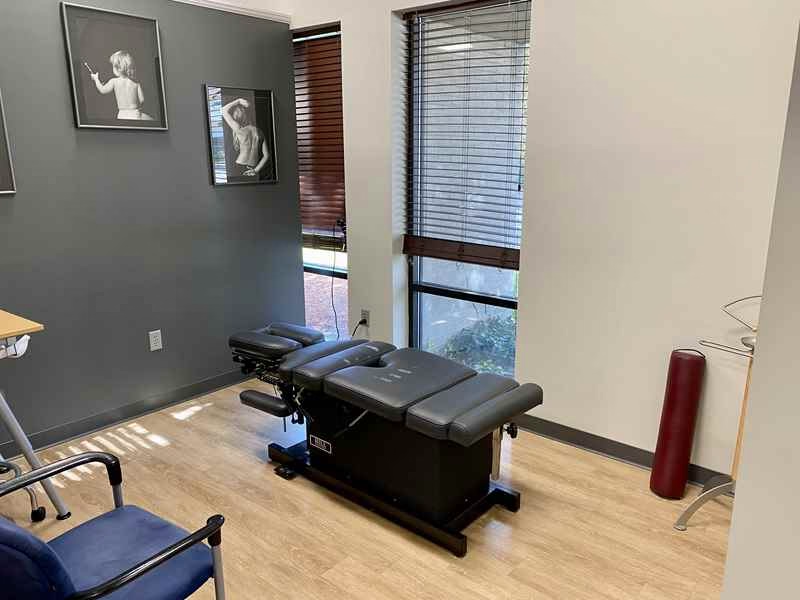
- Thompson Drop Table Technique — uses a segmented drop table that allows Dr. Clayton to deliver a lower-force adjustment, making it ideal for patients who are more sensitive or who have conditions that require a gentler approach.
- Activator Method — a low-force, instrument-assisted technique used for patients who prefer a gentler adjustment or for specific joint locations where manual thrusting is not optimal.
- Extremity Adjusting — targeted manipulation of joints in the shoulders, elbows, wrists, hips, knees, ankles, and feet to restore proper mechanics throughout the full kinetic chain.
Integrated Care Beyond the Adjustment
At Ghent Chiropractic, the adjustment is the foundation — but it is rarely the only tool Dr. Clayton uses. For most patients, adjustments are combined with Active Release Techniques to address accompanying soft tissue dysfunction, FAKTR therapy for fascial restrictions, and rehabilitative or corrective exercises to build the muscular support that maintains proper alignment between visits. This integrated model produces significantly faster and longer-lasting results than adjustments alone.
To schedule your chiropractic adjustment with Dr. Clayton in Norfolk, VA, call Ghent Chiropractic at (757) 622-1222 or request your appointment online.
Frequently Asked Questions About Chiropractic Adjustments in Norfolk, VA
What does a chiropractic adjustment feel like?
Most patients find chiropractic adjustments comfortable — and many describe the experience as immediately relieving. You may hear or feel a popping sensation during a spinal adjustment, which is simply gas releasing from the joint capsule as pressure is normalized. Some patients experience mild soreness for 24 to 48 hours after their first few adjustments, similar to the feeling after a new workout, as the body adapts to restored movement.
Is the popping sound during an adjustment harmful?
Not at all. The audible pop that sometimes accompanies a chiropractic adjustment is caused by the rapid release of dissolved gases — primarily nitrogen and carbon dioxide — from the fluid within the joint capsule. It is the same phenomenon that occurs when you crack your knuckles and is completely harmless. An adjustment can be perfectly effective whether or not an audible release occurs.
Are chiropractic adjustments safe?
Yes. Chiropractic adjustments are one of the safest, most well-researched forms of conservative musculoskeletal care available. Dr. Clayton conducts a thorough examination and health history review before beginning any treatment to ensure adjustments are appropriate and safe for each individual patient. Serious adverse events from chiropractic adjustments are extremely rare.
How many adjustments will I need?
The number of adjustments needed depends on the nature and severity of your condition, how long it has been present, and your body’s response to care. Acute conditions often respond quickly, while chronic or complex conditions may require a longer course of treatment. Dr. Clayton will outline a realistic care plan with clear milestones during your Report of Findings appointment.
Can Dr. Clayton adjust joints other than the spine?
Yes. Dr. Clayton is trained in full-body extremity adjusting and routinely treats joints throughout the body including the shoulders, elbows, wrists, hips, knees, ankles, and feet. Many pain conditions and movement restrictions originate in or involve the extremity joints, and addressing the full kinetic chain produces far superior outcomes to spinal-only treatment.
Will I need chiropractic adjustments forever?
Not necessarily. Most patients complete a defined active care plan and then transition to periodic wellness visits to maintain their results. How often ongoing care is needed varies by individual. Some patients choose to continue regular wellness adjustments indefinitely because of the benefits they experience, while others only return when a new problem arises. Dr. Clayton will never recommend more care than your condition clinically warrants.
What should I do after a chiropractic adjustment?
After an adjustment, it is generally beneficial to stay hydrated, move gently, and avoid prolonged static postures. Dr. Clayton may recommend specific stretches or exercises to perform at home following your visit. If you experience any significant soreness or discomfort after an adjustment, simply call our office at (757) 622-1222 — this is rarely serious and can usually be addressed with minor modifications to your care plan.